In Partnership with Chattanooga Public Library
View instructions
You need a Tennessee driver’s license or learner’s permit if you want to drive on Tennessee streets and highways. To qualify for a Class D license, you must be at least 16 years of age, and must pass a vision screening, knowledge test, and driving test. The TN DMV written test covers the contents of the Tennessee Driver's Handbook, and includes questions on road rules, road signs and signals, and safe driving practices. The Tennessee DMV test consists of 30 questions, and you must score 80% or higher (at least 24 correct answers) to pass. Practice with this sample DMV test to familiarize yourself with the format of the Tennessee written test.
Updated for 2026 DMV rules.
1.
When exiting a highway, you should slow down:
|
Once you have moved into the exit lane.
|
|
|
Once you see the toll booth.
|
|
|
Before moving into the exit lane.
|
2.
Double solid yellow lines mean:
|
Passing is not permitted in either direction.
|
|
|
Passing is permitted in either direction.
|
|
|
The lane to the left may pass.
|
3.
You are going to make a left turn from a dedicated left-turn lane when a yellow arrow appears for your lane. You should:
|
Be prepared to obey the next signal that appears.
|
|
|
Speed up to get through the intersection.
|
|
|
Stop and not turn under any circumstances.
|
4.
When the light is green, drivers should:
|
Go, but only if the intersection is clear.
|
|
|
Yield to pedestrians and vehicles still in the intersection.
|
|
|
All of the above.
|
5.
When you travel in a work zone, you should:
|
Slow down and obey posted speed limits.
|
|
|
Watch for cones, signs, barrels, large vehicles, or workers.
|
|
|
All of the above.
|
6.
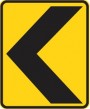
This sign warns you of:
|
A change in direction.
|
|
|
Narrowing of the road.
|
|
|
All of the above.
|
7.
A road is likely to be most slippery:
|
When icy and the temperature is near freezing.
|
|
|
In cold, dry weather.
|
|
|
In spring.
|
8.
Drinking alcohol while taking drugs can:
|
Have a less pronounced effect than either taken separately.
|
|
|
Have a more pronounced effect than either taken separately.
|
|
|
Improve concentration.
|
9.
Allowing a space cushion around your vehicle is important because:
|
It helps you see your blind spots.
|
|
|
It increases your braking distance.
|
|
|
It gives you more time and room to react to changing traffic and road conditions.
|
10.
What is the ideal hand position on the steering wheel for safe driving?
|
11 o’clock and 6 o’clock positions.
|
|
|
7 o’clock and 5 o’clock positions.
|
|
|
9 o’clock and 3 o’clock positions.
|
Next page